The Ghana Irrigation Development Authority (GIDA) was set up in the early sixties when it functioned as Land Planning and Soil Conservation Unit (LPSCU) of the Ministry of Agriculture. In 1964 the LPSCU was upgraded to division status in the Ministry and known as the Irrigation Reclamation and Drainage Division (IRDD). In 1974, the IRDD was further transformed into a complete Department of the Ministry and called the Irrigation Department. The department was out doored as an autonomous entity through the promulgation of the Irrigation Development Authority Decree, 1977 (SMCD 85). The objects and functions spelt out in this decree largely determined the structure of the Authority from then on.
Presently the Authority is organized into five functional Departments which are responsible for the technical and operational assignments contingent on the annual performance targets set by the Authority The Departments are as follows:-
Planning, Budgeting Monitoring and Evaluation (PME)
Project Development
Scheme Oversight (S.O)
The Legal and Administration (L&A)
Irrigation Technology and Innovation
There is also an Internal Audit Department. This department plays a critical role in ensuring that funds and other resources of the Authority were put to judicious use and that proper accounting and reporting procedures were duly complied with.
Ghana Irrigation Development Authority (GIDA).
GIDA Restructuring and Modernization
GIDA, is currently undergoing restructuring and modernization in order to meet changing trends in the irrigation sub-sector. The restructuring will bring about a change which will transform the Authority into an autonomous, flexible, proactive, sub-sector planner, regulator, advisor, supervisor, facilitator and public service provider.
Additionally, the restructuring and modernization requires GIDA to move away from Operation, Maintenance and Management (OM&M) of schemes. The result is that some of the schemes will be managed under Public Private Partnership (PPPs) arrangements by Scheme Management Entities (SMEs). The SMEs will be in charge of the day-to-day management of small and large schemes and undertake key functions that will include operation and maintenance of infrastructure and administrative activities including the collection and proper use of Irrigation Service Charges (ISC) which will be paid by farmers. Small schemes with no SMEs will be put under the management of Water User Associations (WUAs).
ACHIEVEMENTS
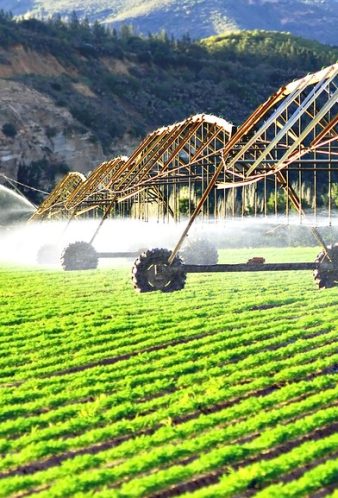
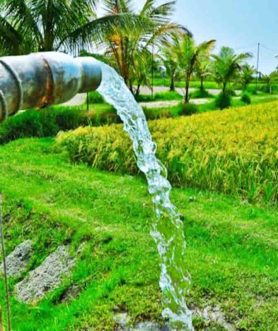
GIDA over the years have developed a lot of community based irrigation infrastructure for the use by small scale farmers. Fifty seven (57) irrigation schemes have been developed by GIDA country wide, with a total of about twelve thousand eight hundred and three (16,175ha) of land being put under irrigation for the cultivation of various vegetable crops and rice. This is to enable small scale farmers cultivate the land all year round and consequently increase their farm income annually
MISSION, VISION & CORE FUNCTIONS
How we operate
as the leader in utilizing water resources
To be the leader in the development, promotion, and utilization of available water resources for agricultural use to ensure food security and sustainable livelihoods.
Improve infrastructure and technology for efficient agricultural water use.
Ensure equitable and sustainable access to water for farmers.
Promote research, education, and partnerships in water resource management.
Our Mission
To provide effective and efficient Agricultural Water Management services and maintain reliable irrigation systems for the sustained benefit to the national economy through the formulation, regulation, and execution of appropriate policies to benefit farmers, industry, and institutions within a sustainable environment.
Deliver efficient water management and reliable irrigation services.
Formulate and enforce policies that support farmers and industry.
Promote sustainable practices that benefit the economy and environment.
Our Core Functions
Formulate in partnership with other stakeholders plans for the development of water and related resources and improve the management of existing water resources.
Extend institutional support and strengthen the capacity of irrigation farmers and related industries.
Provide efficient technical services to state agencies and other customers with plans to establish irrigation, drainage, and other related facilities.
Strengthen institutional capacity, attract, and retain a highly motivated staff in the Authority.
Provide timely, accurate and useful information for efficient management.
Policy Objectives
As a Public Institution, GIDA operates within the Government’s agricultural policy framework and must appropriately respond to this. The sector’s objectives for the planned period are as follows
Food Security and emergency preparedness.
Increased growth in incomes.
Increased competitiveness and enhanced integration into domestic and international markets.
Sustainable management of land and environment.
Science and technology applied in food and agriculture.
Improved institutional coordination.
OUR PARTNERS
CONTACT GIDA
Get In Touch With Us
We’re here to support your irrigation and water management needs—reach out to connect with our team.